KYC (Know Your Customer) and AML (Anti Money Laundering) are essential components of modern compliance frameworks. Their primary purpose is to verify customer identities, assess risk, and prevent financial crime such as fraud and money laundering.
Many financial institutions still struggle with manual KYC and AML workflows that are labor intensive, fragmented, and slow. Traditional customer onboarding processes often rely on back and forth emails, document chasing, and multiple disconnected systems, which can delay onboarding and increase operational costs. These inefficiencies become more visible as organizations scale, especially when teams must dedicate significant time to repetitive tasks that could be automated.
By transitioning from manual processes to KYC process automation, organizations can consolidate customer data, reduce errors, and accelerate onboarding. Automated compliance workflows free teams to focus on more complex risk assessments and improve client experience by reducing turnaround times. As customer expectations rise and regulatory requirements tighten, adopting a scalable and structured compliance approach becomes a competitive advantage rather than an option.

Why KYC and AML Processes Often Fail in Practice
Traditional KYC processes are often manual and fragmented. Customer documents are exchanged via email, internal teams rely on spreadsheets, and updates can be lost or delayed. This approach leads to slower customer onboarding, higher risk of human error, and inconsistencies in how AML compliance data is stored and managed.
Limited visibility into the workflow makes it difficult to track progress or identify missing information. Without clear oversight, compliance becomes reactive rather than controlled, increasing both operational risk and the chance of regulatory issues.
Building a Scalable KYC and AML Workflow
An effective KYC process is not just about collecting documents. It is about designing a workflow that ensures accuracy, efficiency, and compliance at every step.
A well-designed KYC and AML workflow guides customers through data collection, captures required information correctly, and provides teams with clear visibility into each stage of the process. It also supports internal approvals and secure data storage in a centralized system.
Automation plays a critical role in building a scalable process. By reducing manual tasks and standardizing the KYC process, businesses can improve data quality, accelerate customer onboarding, and maintain consistent AML compliance across all cases.
How KYCEasy Improves KYC and AML Compliance
KYCEasy is designed to help businesses streamline their KYC process and AML compliance by replacing manual workflows with a structured, automated system.
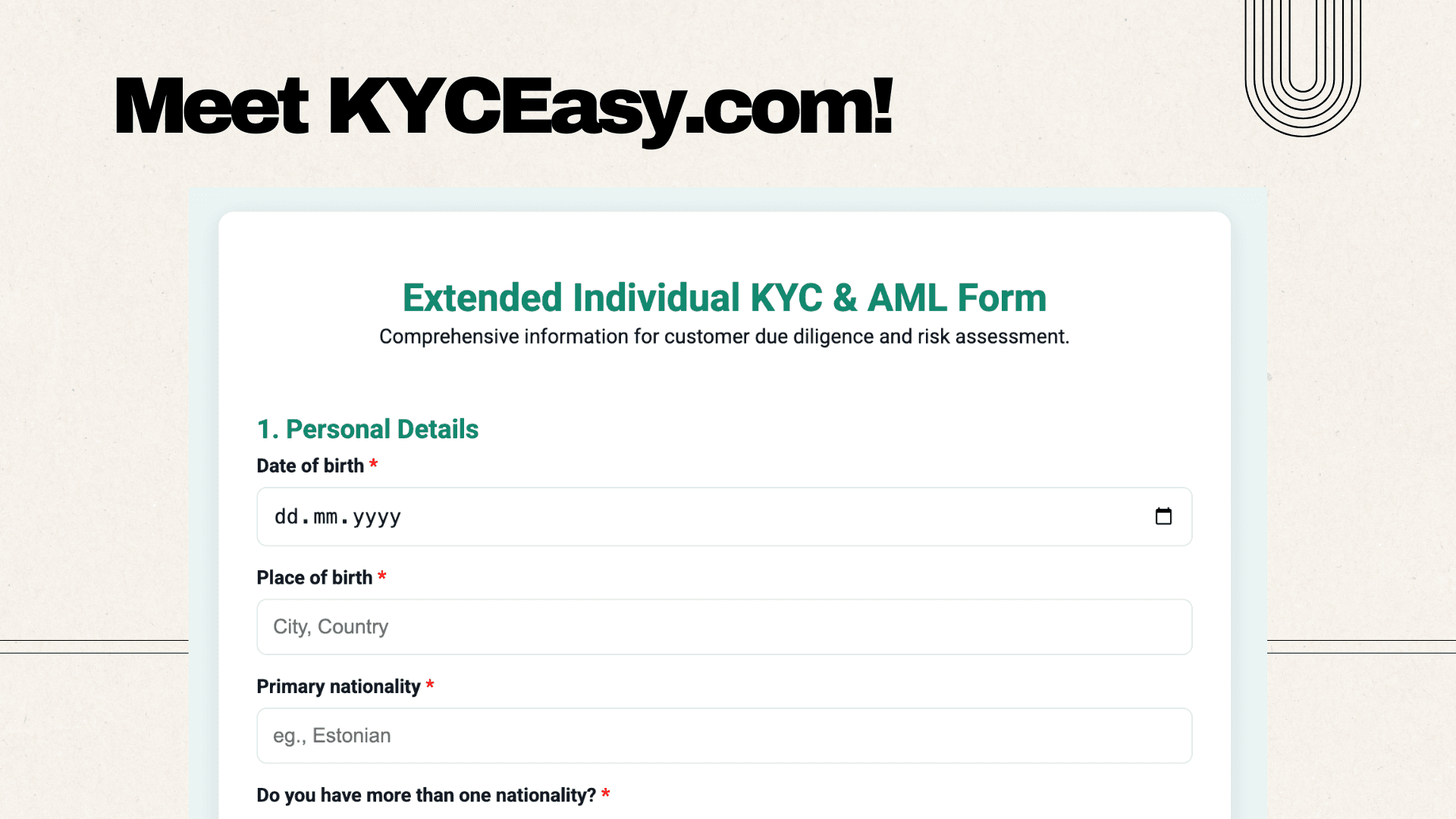
Instead of relying on emails and disconnected tools, companies can collect customer data through dynamic forms tailored to their specific KYC requirements. These forms guide users through the process, ensuring that all necessary information is provided from the start and reducing the risk of incomplete submissions.

The platform automates the entire data collection flow, including sending forms and managing reminders, which significantly reduces the need for manual follow-ups. Electronic signatures are built directly into the process, allowing businesses to complete compliance workflows without relying on third-party tools.

For internal teams, configurable approval workflows ensure that each case follows a defined process, while real-time tracking provides full visibility into every interaction. All collected data is stored in a unified, secure, and audit-ready customer database, making it easy to access and manage compliance records at any time.

Benefits of Automating KYC and AML Processes
Automating KYC and AML processes helps businesses improve efficiency, reduce risk, and create a more scalable approach to customer onboarding and compliance. These improvements are reflected across multiple areas of the business, from faster operations to better compliance control.
Faster Customer Onboarding
- Automating KYC and AML processes reduces delays caused by manual communication and incomplete submissions, allowing businesses to onboard customers more quickly and efficiently.
Improved Data Accuracy
- Structured data collection minimizes human error and ensures that all required information is captured correctly from the start.
Standardized KYC Process
- A well defined KYC process helps ensure that customer data is collected consistently across all cases, reducing variability and supporting stronger compliance practices.
Full Process Visibility
- Clear visibility into the KYC and AML process allows teams to better monitor progress, identify gaps in data collection, and maintain control over compliance activities.
Simplified Audit Readiness
- Centralized and well structured data makes it easier to prepare for audits and respond to regulatory requirements without unnecessary effort.
Lower Operational Costs
- Reducing manual work decreases administrative overhead and allows teams to focus on higher value tasks.
Better Customer Experience
- A guided and intuitive onboarding process improves usability, which can lead to higher conversion rates and stronger client relationships.
Scalability for Growing Businesses
- A structured and automated KYC workflow makes it easier to handle increasing volumes of customers without adding complexity.
Simplifying Compliance for Modern Businesses
KYC and AML compliance will remain a critical part of doing business. The difference lies in how efficiently these processes are managed.
By introducing structure and automation, businesses can turn compliance into a scalable and controlled process that supports growth instead of slowing it down.
KYCEasy offers a unified solution for managing customer onboarding, approvals, and secure data storage in one platform. Instead of handling compliance manually, businesses can rely on a predictable, auditable, and scalable workflow.
Start for free by signing up, book a demo or see how it works in our video.