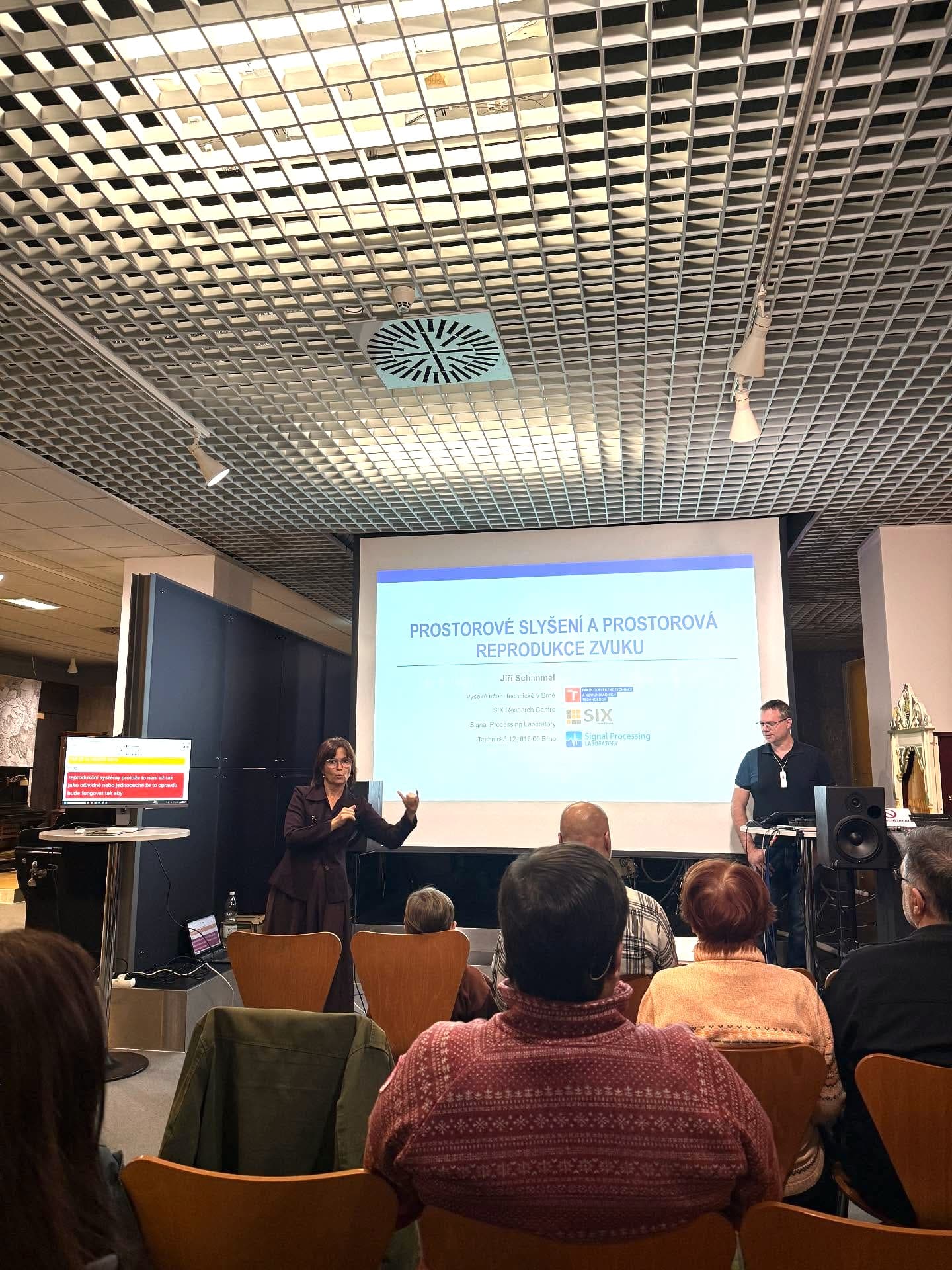
Not every customer story is about scale or measurable return. Some are about a small organization doing important work with limited resources, looking for a simpler way to handle documentation that used to eat into time meant for clients. Unie neslyšících Brno (UNB) is a nonprofit association providing registered social services for hearing impaired clients across Brno and the surrounding region, including sign language interpreting, counseling, educational programs and compensation aids for deaf and hard of hearing residents.
You are more than welcome to support UNB activities on their website and buy some of their T-shirts and other accessories.

Before adopting PDF Generator API Web Forms, the team managed the documentation behind its interpreting service by hand, moving between Word, PDF conversion and Excel for evaluation. Web Forms let them replace that manual process with a single online form: staff enter the session details once, the data maps straight into a predesigned template, and a finished document is generated automatically on submission.
Administering an essential service with limited tools
UNB’s core work is providing interpreting and related support services to deaf and hard of hearing clients in Brno and its surrounding area. Every session generates documentation that needs to be recorded, checked and evaluated, work that sits alongside the direct client support the team is there to provide.
“We provide registered social services for hearing impaired clients in Brno and the surrounding area.”
Until recently, this documentation ran through Word and PDF conversion, with the results tracked and reviewed in Excel.
“So far we have worked mostly with documents in Word and converting them to PDF, and then evaluating them in Excel.”
The challenge: a manual process that pulled interpreters away from clients
The existing process worked, but it was slow, and it depended on staff being carefully oriented in each step to avoid mistakes.
“The whole task took a long time, and it was necessary to be well oriented in it.”
The practical cost fell hardest on the interpreters themselves. Every session meant preparing a paper record, then copying or scanning a large volume of documents, work that took time directly away from the people the organization exists to serve.
“For our interpreters, this meant preparing the written record on paper, copying it, and in some cases scanning a large volume of documents, which took time away from working effectively with clients.”
Because the work was routine and repetitive, it also carried a real risk of recording errors, the kind of small mistake that is easy to make and time consuming to fix by hand.
“It is routine work where a recording error can easily happen.”
The solution: a no code web form that generates the report automatically
UNB began using PDF Generator API Web Forms as a first step toward moving this documentation off paper. Web Forms is a no code builder, so setting it up did not require a developer. The team defined the exact fields their interpreting service needed, including text, dates, single and multiple select options and file uploads, and connected each one directly to a document template.

In practice, this produces a specific document: the Field Interpreting Services Report (“Výkaz o tlumočnických službách v terénu”), which captures the user’s name, the date and location of the session, contact email, a description of the service provided, any additional interpreting services, a satisfaction rating for the session, and the user’s signature. Instead of writing this out on paper and typing it up separately, staff fill in a single online form. The data maps straight into the report template, and a finished, formatted document is generated the moment the form is submitted, with no separate typing, converting or manual formatting step in between.
“The application allows for quick entry of the documentation required for administering the interpreting service.”

The team is treating this as an early stage rollout rather than a finished process. They plan to review how it is working at points through the year, and see it as a foundation they could build on, potentially connecting it to better ways of keeping their service users informed.
“This is a first step, which we will evaluate at certain points over time, but we expect that we could also connect the application’s features to better informing our service users.”
Impact so far: honest, and still early
Asked directly what the tool had changed and whether time or cost savings could be quantified yet, the answer, characteristic of an organization more focused on getting the work right than on marketing a result, was that it is simply too soon to say.
“It is still too early. We will evaluate at the end of the year.”
Feedback so far has been positive, though the organization is deliberately waiting for a larger sample of data before drawing conclusions.
“So far we have had positive reactions, but we need to wait for a larger volume of data. Once we have evaluated that, we will be able to make better decisions about next steps.”
What is clear already is what going back would mean. Asked what would happen if they had to stop using the tool today, the answer was direct.
“We would have to go back to the paper version, with manual recording and evaluation, which is probably something nobody wants.”
Why it matters: visibility for a service that depends on being seen
Asked whether he would recommend PDF Generator API to others, Ivan Poláček framed his answer around the broader mission rather than the product itself, a recommendation aimed at other social service organizations rather than at Actual Reports specifically.
“I would recommend it to any social service to work with modern technology. “

Conclusion
This is not a story about a large deployment or a measurable jump in output. It is Unie neslyšících Brno, doing essential work for the deaf and hard of hearing community in Brno, taking its first step away from paper records and toward something faster and less error prone using a no code web form connected directly to their document template. The organization is still gathering the data it needs to judge the full impact, and has said as much openly. For Actual Reports, the value in this story is in showing up for an organization like this one, wherever the tools could make a practical difference, not in overstating a result that is still unfolding.